
The International Bureau for Epilepsy (IBE) officially launched its landmark “Global Epilepsy Needs Study” (GENS) policy advocacy report at the World Health Assembly in Geneva, Switzerland (https://genspolicyadvocacy.org/). The landmark study addresses a long-standing and critical gap in the epilepsy field, moving beyond a traditional focus on seizure control and clinical management to better understand the holistic, everyday unmet needs of people living with epilepsy.
GENS aims to capture the real-world realities of living with epilepsy—”beyond seizures”—to inform more person-centred, inclusive approaches across healthcare services, research priorities, and global policy development.
Utilising a rigorous mixed-methods approach, the study collected data across 15 countries in 2024, combining 5,296 survey responses with 75 in-depth, semi-structured qualitative interviews, with findings published in 2026. The study systematically evaluates the lived experiences and everyday challenges faced by people with epilepsy across ten vital life domains.
The 10 life domains examined in the study include:
Knowledge & Advice
Safety & Survival
Healthcare & Wellbeing
Learning & Education
Work & Income
Transport & Driving
Community & Family
Mental Health & Wellbeing
Sexual & Reproductive Health
Achieving Life Goals
5 Major Themes Identified through GENS
Across these domains, the most frequently cited and pressing needs were concentrated in five key areas: Healthcare & Wellbeing, Safety & Security, Knowledge & Advice, Community & Household, and Mental Health & Wellbeing. These findings highlight clear global priorities, including:
Improving access to and quality of epilepsy healthcare services.
Strengthening public awareness of epilepsy and basic seizure first aid.
Enhancing the protection of rights and promoting social inclusion for people living with epilepsy.
Addressing the multi-faceted impacts of epilepsy on overall physical health, mental wellbeing, and daily life.
Through a systematic analysis of survey and interview data, the study identified five overarching themes that reflect the structural challenges faced by people with epilepsy and their families across various dimensions of life, highlighting critical gaps in existing policies and support systems. These findings resonate directly with the person-centred, cross-sectoral, and rights-based policy directions emphasized in the WHO Intersectoral Global Action Plan on Epilepsy and Other Neurological Disorders (IGAP):
1. Navigating uncertainty and redefining daily life
2. Living with risk, social exclusion and misunderstanding
3. Challenges in navigating inaccessible systems
4. Consequences of inaccessible or inadequate information
5. Complex epilepsy needs demand more than standard approaches
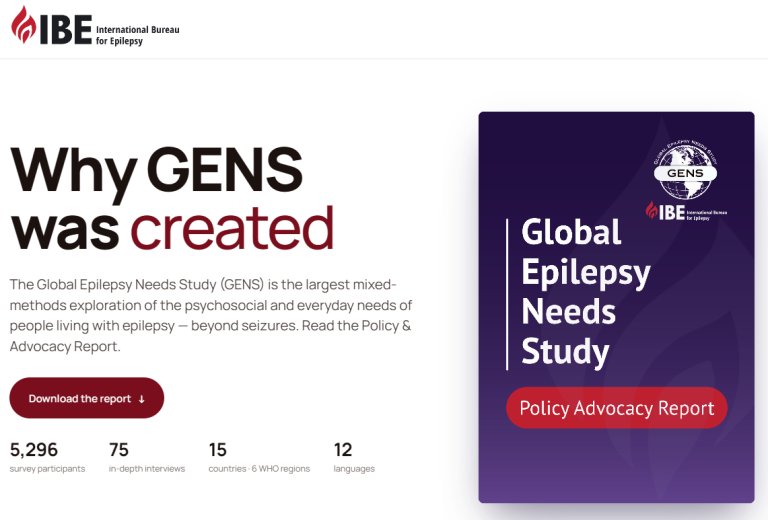
Overall, the study’s findings emphasize that supporting people with epilepsy must extend beyond seizure control to encompass comprehensive, continuous support across all aspects of life. The report sets out cross-cutting global policy recommendations for governments and key stakeholders, aiming to foster coordinated action that addresses current gaps and effectively meets the diverse needs of individuals living with epilepsy and their families.
Note: Patients and family caregivers from Hong Kong actively participated in this global study.
To learn more about the research report, please visit https://genspolicyadvocacy.org/ or contact us.